Photo: Marga van Mechelen
In De Groene Amsterdammer of early July, music critic Bas van Putten looks back on the Holland Festival by asking: Did this edition of the Holland Festival once again succeed in staying ahead of its time? The question implies that a festival with one of the Netherlands’ most illustrious histories has a mission—one in which it has succeeded time and again, or at least in most instances. Its mission is to bring to the stage progressive and innovative productions, increasingly multimedia and interdisciplinary in practice, and thereby to run ahead of the troops of regular programming. Van Putten compares the present with the past, and dismisses one as merely “fun,” while praising another because “it is alive.” Van Putten embodies the predicament faced by many critics, almost regardless of the genre they write about. The harsh criticism I remember from earlier times has become a rarity. Stars in reviews have taken that role away from the critic’s argument. I wonder how often a single star is still awarded, or whether critics would rather not write a review at all in those cases.
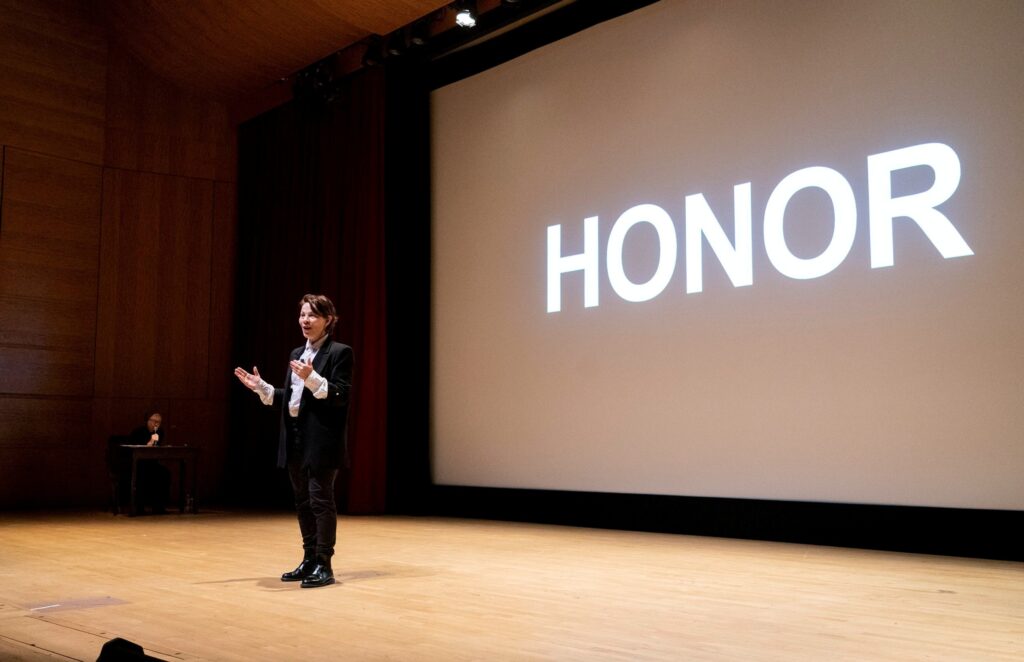
premiered at the Metropolitan Museum of Art, New York, NY, on February 19, 2022
This also struck me in the reviews I read of the latest edition of the Sonsbeek exhibition, in which there was no criticism to speak of. What was there instead? Reviewers brought the ambitions of the board and director to the fore, explained the ideas of the curators and other makers in lucid terms, and in doing so supported the project as a whole. Van Putten, too, wants to take a positive approach; he recognises the spirit of the times, as can be inferred from his final sentence about Honor by performance artist Suzanne Bocanegra: “I thought nothing of it, but I saw the point.” Yet he nevertheless seems to struggle with what should be the primary concern of these artists, theatre-makers and producers: namely, urgency. Not that he denies the urgent issues addressed by artists today, but have they not become too predictable, too often coated in a moralising sauce? Do we really want them to account for themselves time and again, even on stage as part of the performance, he asks? Van Putten is critical of the too easy use of deafening sounds, a view I share, and for which I do not always see a justification in the narrative, other than that they lend a certain sense of pathos to the urgency. However, the importance of this exaggeration should not be underestimated, simply because it influences the state of mind to such an extent that one detaches from cognition, disrupting the performance and transforming it into a physical experience – sometimes even to the point of suffering. This was the primary aim of the Dutch contribution to this year’s Venice Biennale – The Fortress by Dries Verhoeven.
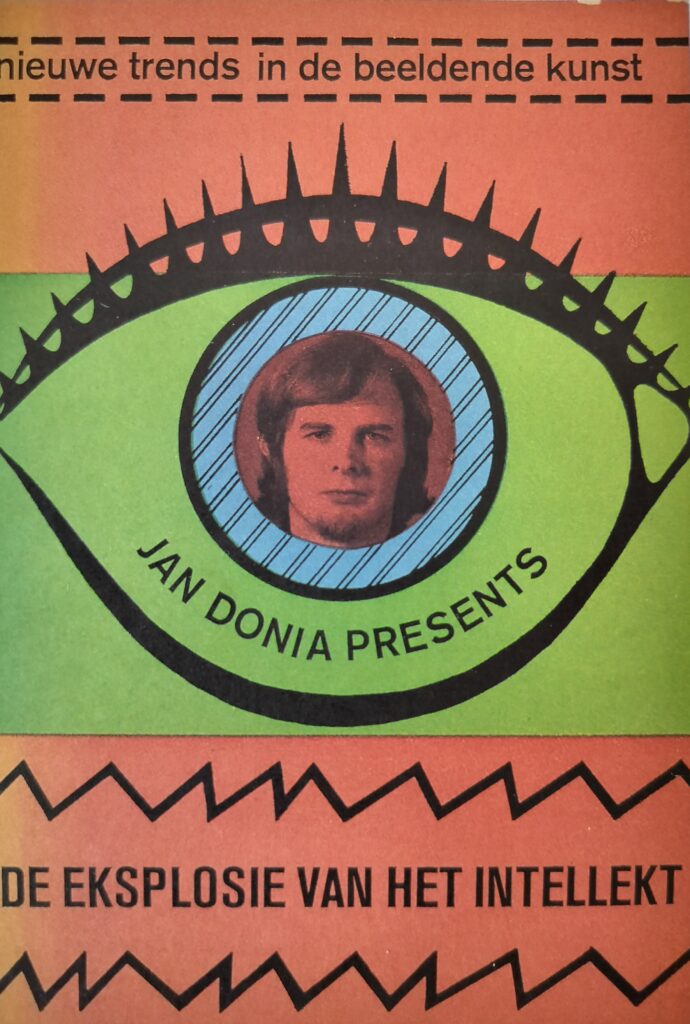
What else strikes me when I, inspired by Van Putten, make comparisons that extend over a longer period? And not in order to argue that things were better in the past, but to make the difference tangible, even if it becomes caricatured. I have already mentioned the role of the critic, who is inclined to make themselves useful and who can neither escape nor perhaps wishes to escape the subjects deemed urgent. The Italian architectural theorist Manfredo Tafuri distinguished between two types of criticism: operative criticism and historical criticism. In the 1960s—the period I have been researching intensively in recent years—almost every artistic movement had one or more operative critics who engaged with a particular form of new art and provided a counterweight to critics practising criticism in the traditional sense. These critics were often also curators of exhibitions. Pierre Restany for example or Jan Donia, in the Netherlands, although more of an omnivore. Operative criticism, incidentally, dates back as far as the late nineteenth century. A more recent development, at least in the Netherlands, is that funding bodies have also ventured indirectly into this field. The need for the other form of criticism, historical criticism, thinking from the perspective of broader historical trajectories and ‘issues’, subsequently grew. This development ran parallel to (post-)conceptualism. Traces of it can be found in Van Putten, but they seem to be thwarted by the trajectories mapped out by the makers themselves, in which their personal histories, cultural backgrounds, migration histories and queer identities often play a role. For critics, it has become increasingly hazardous to pronounce judgement on such matters. This art no longer has to prove itself, so it seems; expressing good intentions is sufficient.
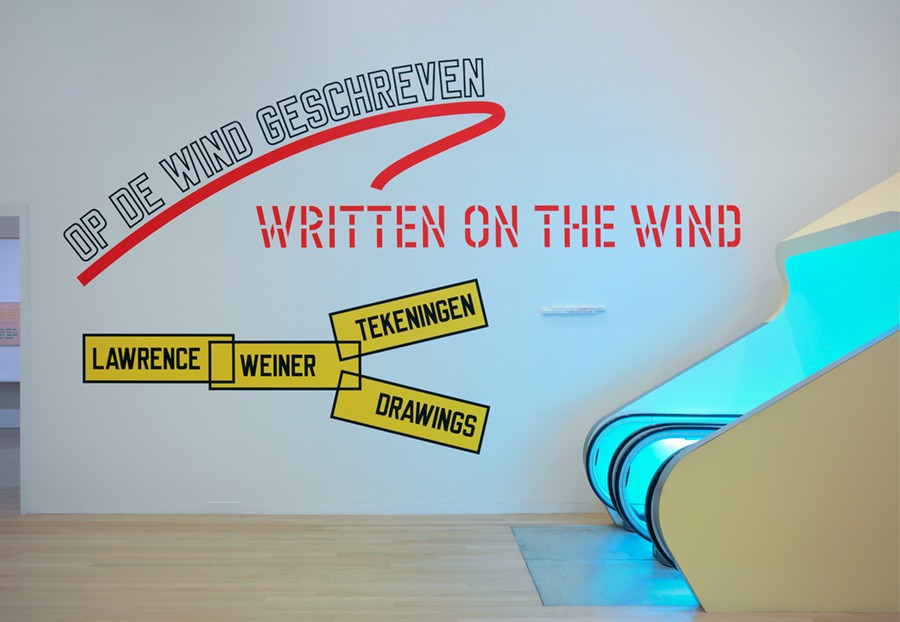
Photo: Gert Jan van Rooij
There is a major difference in the way artists and artistic movements were, or presented themselves, on the market in the 1960s—and also in the decades that followed. In the 1960s, the ZERO artists played the game with considerable flair. “I (Henk Peeters) work in grey, he (Armando) in black, and Jan Schoonhoven in white.” “If I (Peeters) get the Axis powers Germany and Italy, plus Japan as my market [the countries that had divided their spheres of influence during the Second World War, MvM], then you [Piero Manzoni] get the rest—Switzerland remains neutral, and there we will hold a joint exhibition.” (Museumjournaal, 14, 1969, p. 240). Pop art, minimalist and conceptual artists, too, shared this recognisability.The distinctive style of each individual conceptual artist was immediately apparent too and was clearly highlighted in my thesis (1975) on the functions of language in conceptual art, although the kind of rebellious irony displayed by someone like Peeters was nowhere to be found there. Times had changed.
We can conclude that, by comparison, the profiles of contemporary artists are much more discursive and so to say less visual. Enumeration has taken the place of essence, reduction and visual characteristics. This enumeration concerns both the means employed—often pointing towards a multimedia practice—and the fields of activity: the social domains in which the artist operates and the contemporary issues they address, often also connected to a deeply rooted personal motivation. Words you are likely to encounter frequently include ‘identity’, ‘(cultural) memory’, ‘community’, ‘narratives’, ‘climate crisis’, ‘ecology’—in several senses—‘(post)colonial history’, ‘migration’, and so forth. These are the words of makers, art institutions and curators alike. A familiar formula is: “the artist’s practice is situated at the intersection of…”, followed by several words from this or an even longer list. At worst, such a list is all that is offered; but there are many examples in which the terms are elaborated, allowing their interrelationships to be followed. Funding bodies have developed a structure for this purpose. That does not alter the fact that it places considerable demands on the recipient, who, even when well-disposed, frequently complains about the jargon. And once again this sits uneasily with the mission of urgency, relevance or social engagement. Unfortunately, there are hardly any signs that artists, curators and institutions themselves experience the current situation as constraining. So far, at any rate, it has hardly led to any other form of mediation. It is no surprise that the criticism comes notably from those who believe that inclusion and diversity are being given an overly ‘coloured’ interpretation.
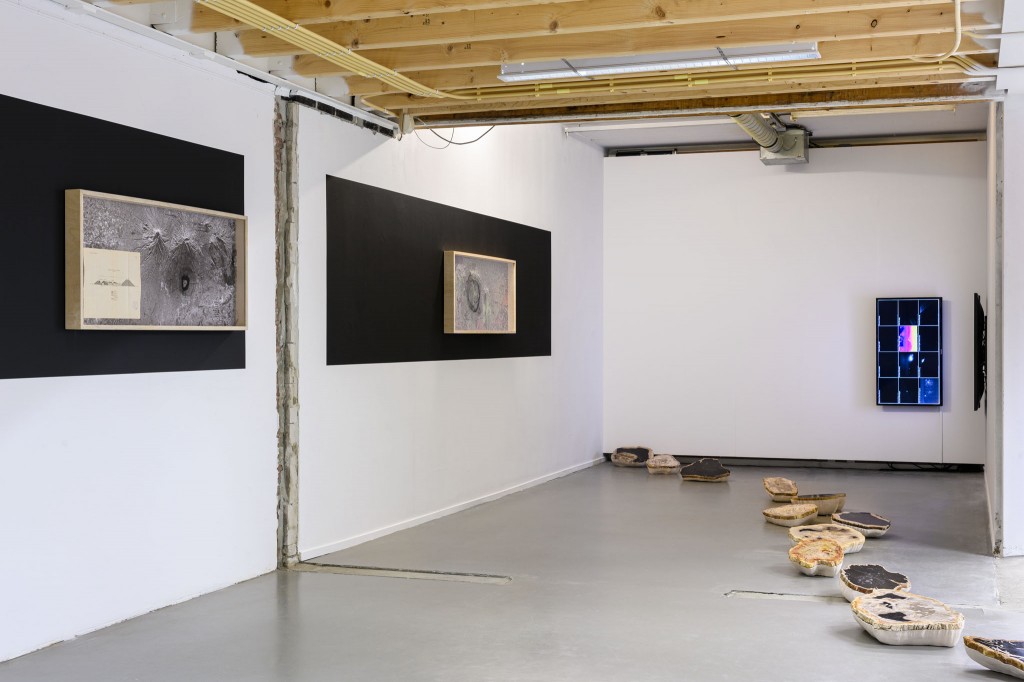
at BAK, basis voor actuele kunst (now: BAK Basecamp), Utrecht,
3 December 2021 – 21 May 2022
Photo: Tom Janssen
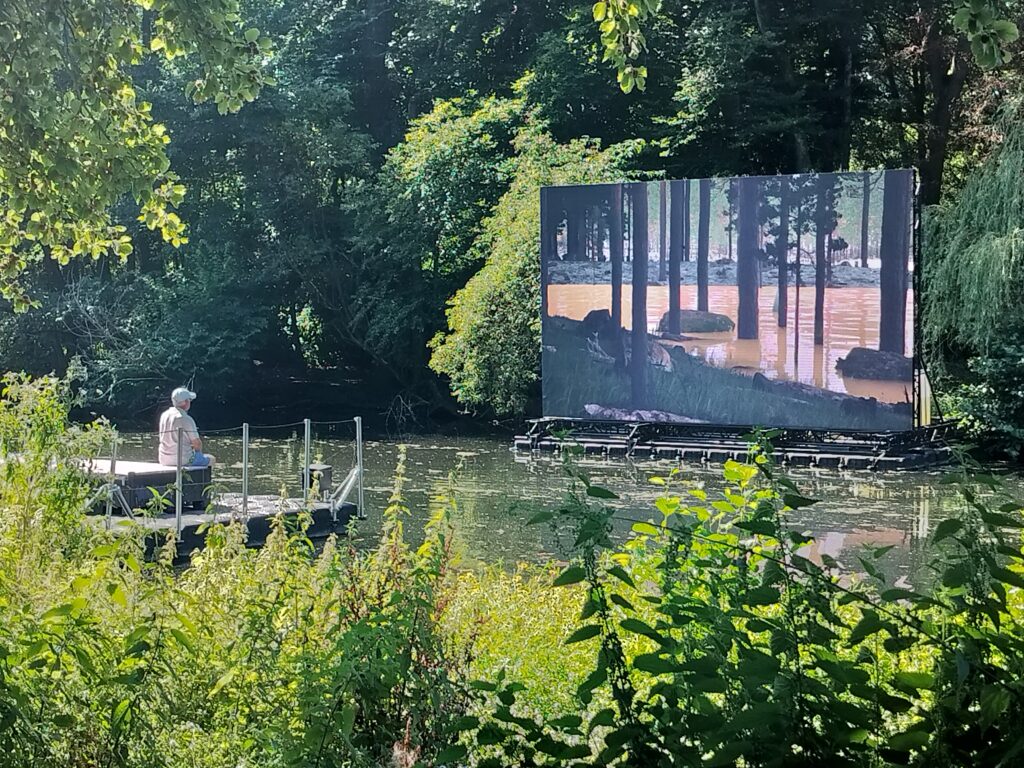
One artist from the Sonsbeek exhibition whom I have been trying to follow for years – although this is difficult, as her works are exhibited all over the world – is Femke Herregraven. On her website, we come across a number of key concepts that overlap with those mentioned earlier. What sets her apart, is her focus on financial systems. Always in combination or intersection with other layers of meaning. A good example is A Petrified Forest, A Calculated Plume, that was on display at BAK Utrecht in 2021/2022. Two such layers are geology and colonial history. At the heart of this project lies a well-known and extensively studied volcano, Mount Merapi on the island of Java – a region in which the Netherlands, as a colonial power, played a role. In our time, the volcano has become the subject of financial speculation, she argues. She lists on her website the following components and media associated with these layers of meaning: “sculptural works comprising ceramics and 20-million-year-old fossilised wood from Java; framed silkscreen prints on Dibond and acrylic of Dutch colonial geological drawings from the 1910s, geological diagrams, remote-sensing images and archive material; a two-channel video with live footage of Mount Merapi; and a video essay.” The list as such takes on a greater independent significance than the traditional caption. Like most of her other projects, this one is exhibited in a single space. The project for Sonsbeek, however, is spread across the park and is entitled: The Evacuated (Memory Machines of Sonsbeek). At four locations, the focus is on what the park harbours from the past – both historically and ecologically – and on the scenarios for the future – pessimistically – or should we say realistic? – referred to as disaster scenarios. The link between the two and the fluid nature of this dynamic is what she seeks to give shape to. Sensors collect data that control the simulation of a Dutch forest on the large screen in the park’s Grote Vijver, thereby ensuring a continuous rewriting of the images.
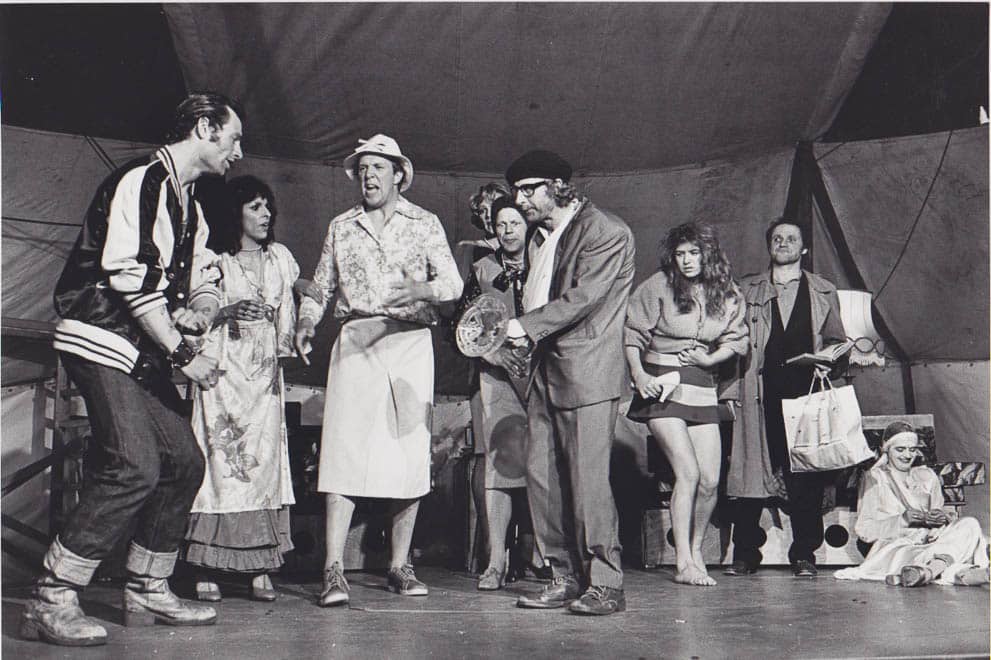
performed between 19 May 1976, and 13 October 1977
I have already mentioned the funding bodies a couple of times. For someone like Herregraven this is indispensable. It is not surprising that her website as a research overview is supported by the Mondriaan Fund. In the Netherlands, the role of the Fund cannot be ignored. The exchange and coordination between funding bodies and artistic practice has, over time, become increasingly decisive. We can already see changes taking place in the early 1970s, when the provision of project subsidies to institutions became commonplace. The terminology then moves from the key concepts of ‘experiment’, ‘the dissemination of emancipatory and democratic values’ and ‘renewal’ towards ‘social relevance’ and ‘geographical distribution’, until, in 1982, the tide turns and ‘quality’ comes back into view for the first time in many years. An exceptional, but telling case, in the 1960s, was the start-up subsidy awarded to a new theatre company, the Werkteater, with the sole requirement that the entire country should benefit from it. The words came directly from the Minister of Culture, Mrs Marga Klompé (Annual Report, ‘365 werkdagen van het werkteater’, 1970). With complete autonomy, the Werkteater would develop into the most socially engaged theatre company of the 1970s, addressing subjects such as psychiatry, care for the elderly and homosexuality. The vast majority of their performances took place outside Amsterdam in venues that could not be classified as traditional theatres, including their own circus tent. (1)
A few years before its establishment in 1970, I reviewed the try-outs of the Noorder Compagnie, productions of plays by Samuel Beckett and Eugène Ionesco that moved me deeply. The Werkteater did the same, but now with both laughter and tears, in performances in which the fourth wall had been brought down completely. And that wall has never returned in quite its old form.
(1) August 6, Peter Faber, one of its founders, passed away.