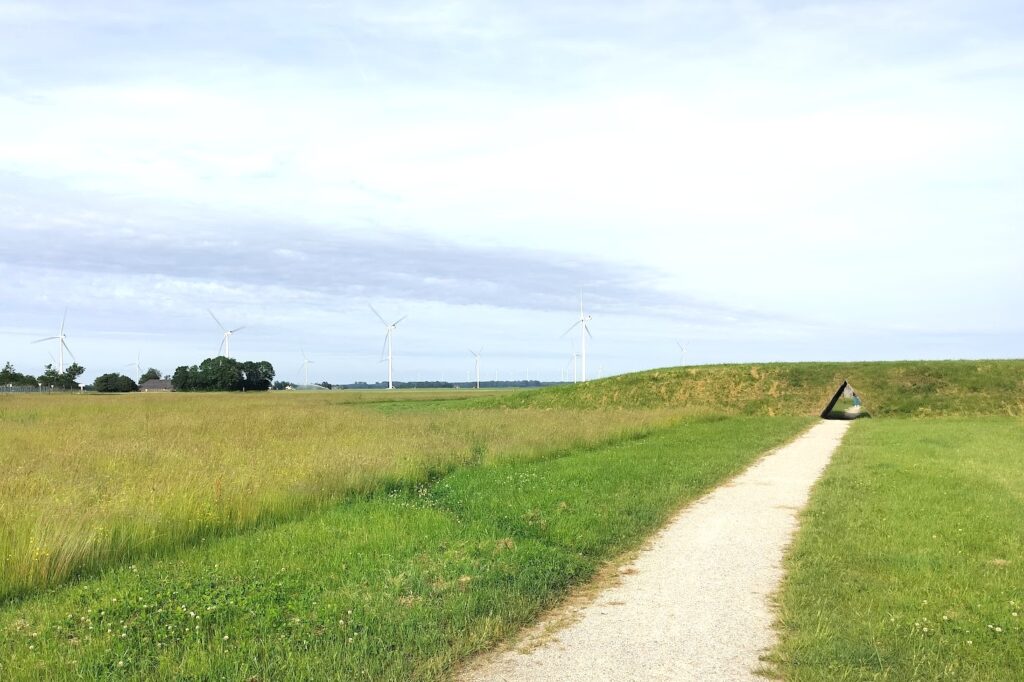
With the word nostalgia, you can go in almost any direction —except the right one. That familiar Dutch saying was my immediate reaction after reading the editorials in the special Nostalgia issue of the art magazine Metropolis M. This despite the editor-in-chief’s attempt to pre-empt criticism by arguing that our present moment calls for a “reset” and that the issue makes room for a plurality of voices, critical ones included. Having read the contributions, however, my conclusion is that the authors become trapped by their subject—whether through their own reasoning or through the theorists on whom they rely.
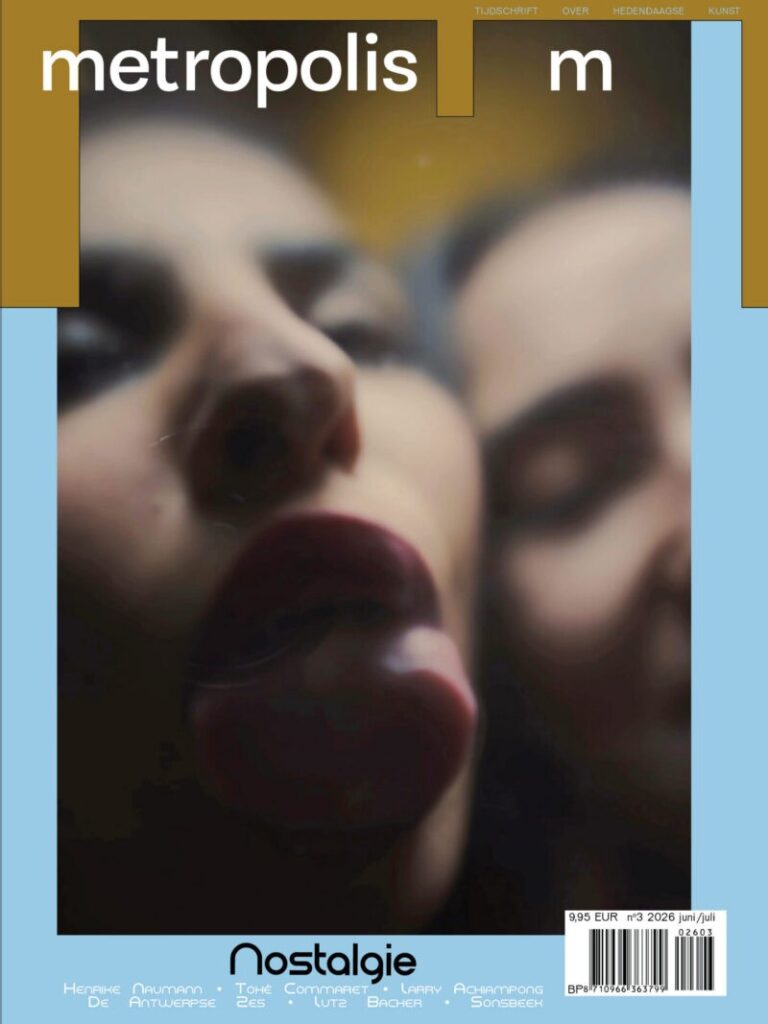
For me, nostalgia has never been a particularly significant theoretical concept. Desire and various forms of idealization, viewed from a Lacanian and/or Freudian perspective, have been far more productive, as have mythologies, understood as semiotic objects. Ever since I began studying the image of the 1960s in the Netherlands, my attention has increasingly turned to the processes of mythologising and demythologising. The latter, unsurprisingly, comes naturally to my own generation. During my research I found myself wondering who, where, preferred one of these terms rather than the other —or an equivalent.
Some time ago I read a dialogue in the left-liberal weekly De Groene Amsterdammer between two well-known, somewhat older female essayists, both undoubtedly capable of directing a critical gaze at themselves as well as the world around them. After jointly sketching a bleak diagnosis of the present, one of them let slip what sounded to me like a sigh: if only for a moment, she could return to the 1960s. Among my students—particularly those from abroad—I had long noticed an unusually rosy view of that decade, with the Dutch case held up as exemplary. Dutch art from the period energized them; above all, they delighted in its idiosyncratic character. So did I. Unfortunately, nostalgia itself carries none of that flavour, and neither does most of the art discussed in Metropolis M. So be it. That is apparently where we are now. We are resetting.
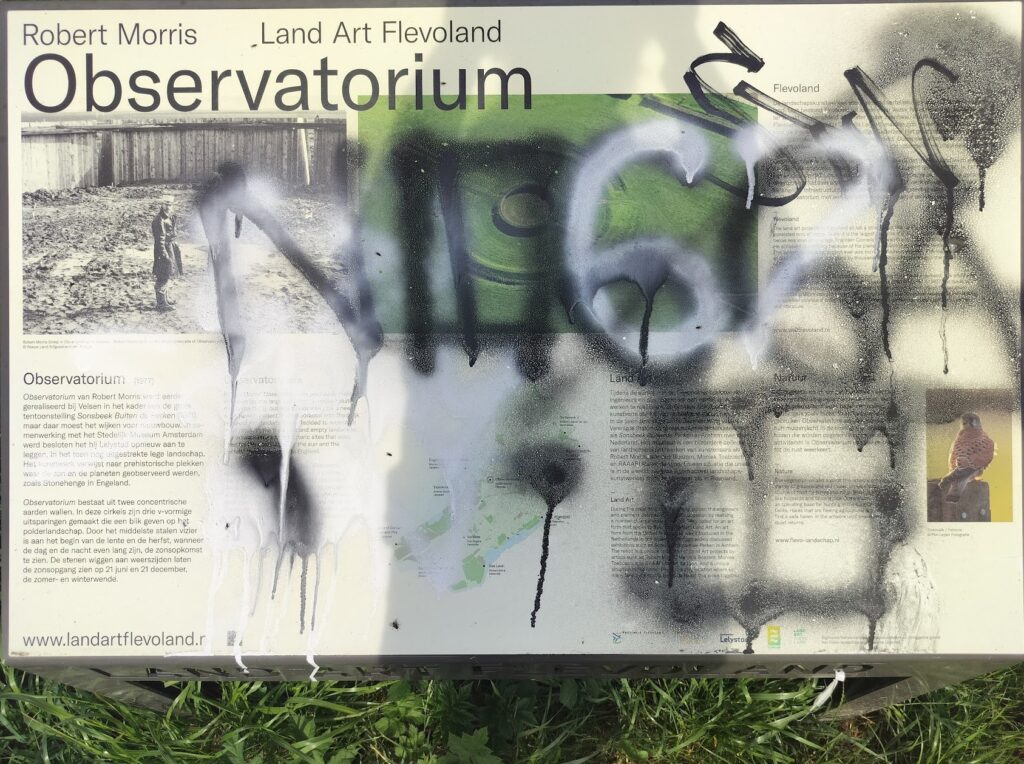
In truth, I have never abandoned a conviction that has guided my entire career—and, although I did not recognise it as such at the time, long preceded it. It comes from the Viennese art historian Franz Wickhoff: whoever does not accept the art of their own age does not accept their own age. I am perfectly willing to give nostalgic art the benefit of the doubt. What I found much harder to accept was the graffiti that confronted me recently, entirely without warning, precisely at a site that once embodied the very opposite of today’s art—a monument to the “great radical transformations” of the 1960s and early 1970s. The place was Swifterbant, in the Flevoland polder, which I have visited on several occasions. My previous visit must have been before the landscape was adorned—or disfigured, depending on one’s taste—by ranks of giant wind turbines. I had come to see Robert Morris’s Observatory, originally commissioned for Sonsbeek ’71. It first stood among the dunes near Santpoort and Velsen before being reconstructed at Plot G64 in Flevoland. According to the engineer J. F. W. Zuydgeest, this was the ideal location, a place where the work could remain for eternity. He was thinking ahead, imagining the future, but he had not foreseen the arrival of the wind turbines. Among the engineers who built the polders, it was by no means unusual to describe their own designs as works of art or to view the reclaimed landscape through the eyes of Mondrian. It is therefore hardly surprising that they embraced Land Art with such enthusiasm.
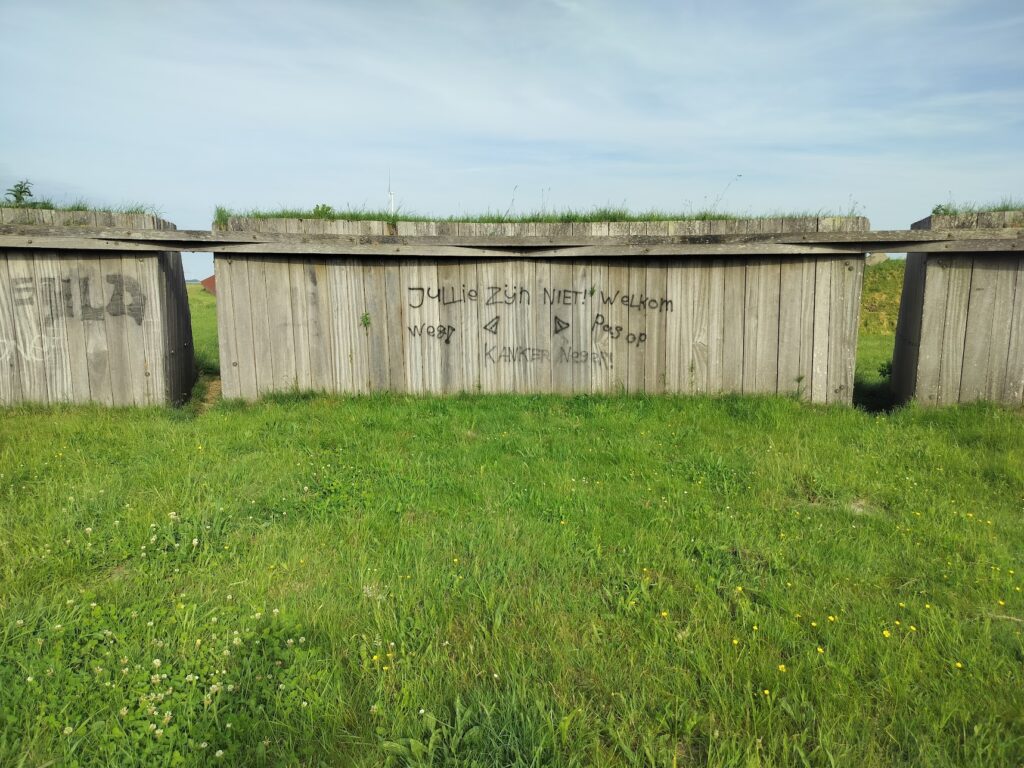
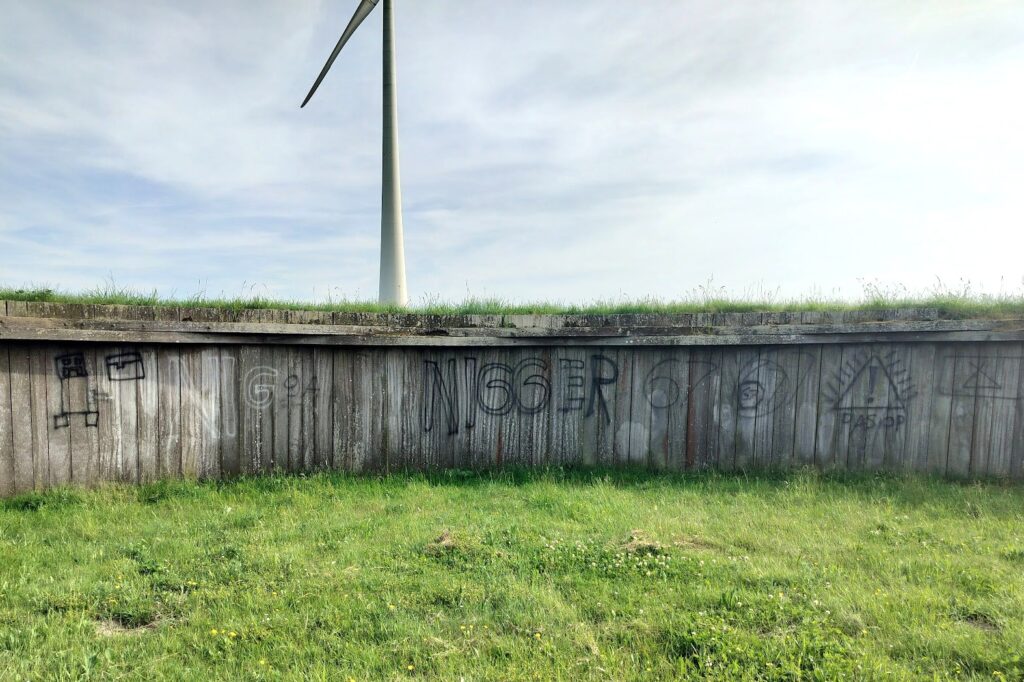
Not long ago I happened to see Observatory featured in the television programme Kunst in het Wild. The filmmakers must have visited only shortly before I did. Yet what they attempted to present was the Observatory as it could have been seen decades ago—not what I encountered: an earthwork hemmed in by wind turbines. That, however, was not enough to make me turn back. I walked towards the centre of the structure and found the wooden walls covered with slogans:
YOU are NOT! welcome! Get out! Cancer Nigger Watch out; Nigger 67 67; NAZIS ARE GAY.
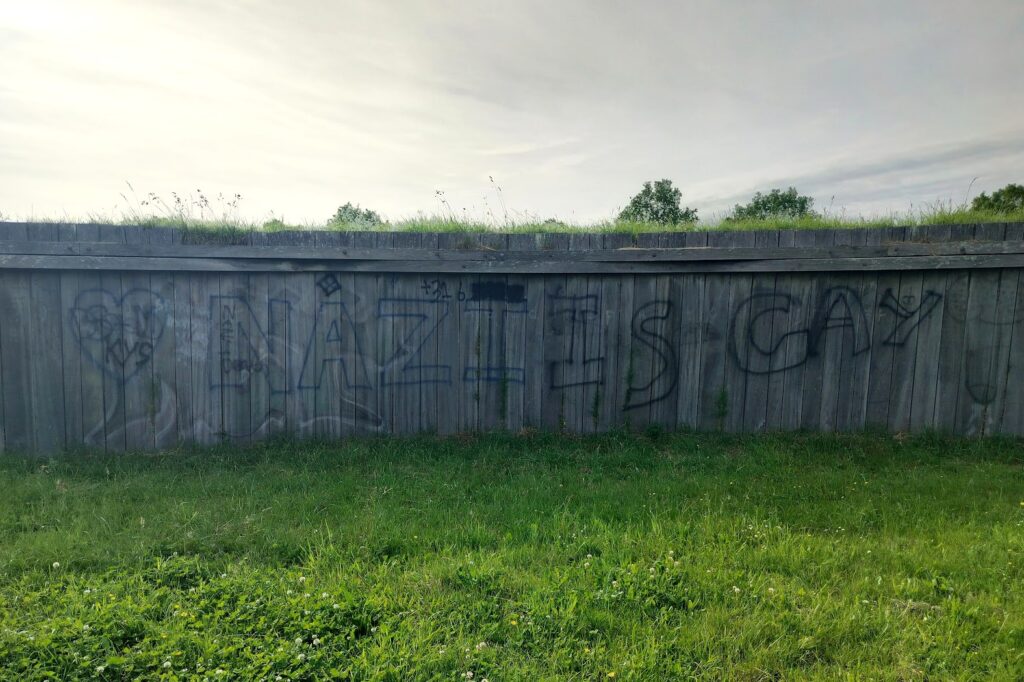
Scattered among them were crude drawings of the Star of David and a clockwise swastika. Who, exactly, were these messages meant for? Who had written them? One person—or several? By now we have grown accustomed to such language, even those of us who, like me, barely set foot on social media. Even so, here—in this remote place, with no audience to perform for—I was wholly unprepared for it. It was the shock of the committed social democrat in me, together with the dispiriting sight itself, that made me turn away and leave. Soon my shock gave way to anger. It was not only I who had neglected this work of art for far too long; the agencies entrusted with its care had done the same. And then, much to my own surprise, feelings of nostalgia began to surface. They were nourished over the following weeks by my daily walks through Sonsbeek Park, where the works for what is now the thirteenth edition of the Sonsbeek exhibition are beginning to take shape. To my eye, it is a decidedly modest edition: discreet works that blend into the colours of the park, nothing that suggests radical shifts of scale or daring explorations of new media.
Sonsbeek ’71 quite literally—as Observatory demonstrates, and figuratively—went off the beaten track. Above all, however, the exhibition offered a cross-section of the art of its time—of what counted as contemporary art as it was then understood. Some works deliberately broke ranks, others stayed on a more orthodox course; some were feats of intellectual sophistication, others positively championed the banal; some relied on nothing more than the human body, while others concealed themselves behind the video camera. The exhibition went on to become the most internationally celebrated edition of Sonsbeek, largely because of its Land Art and its conceptual ambitions. Yet in reality it was a glorious jumble of media, artistic languages and aesthetic positions.
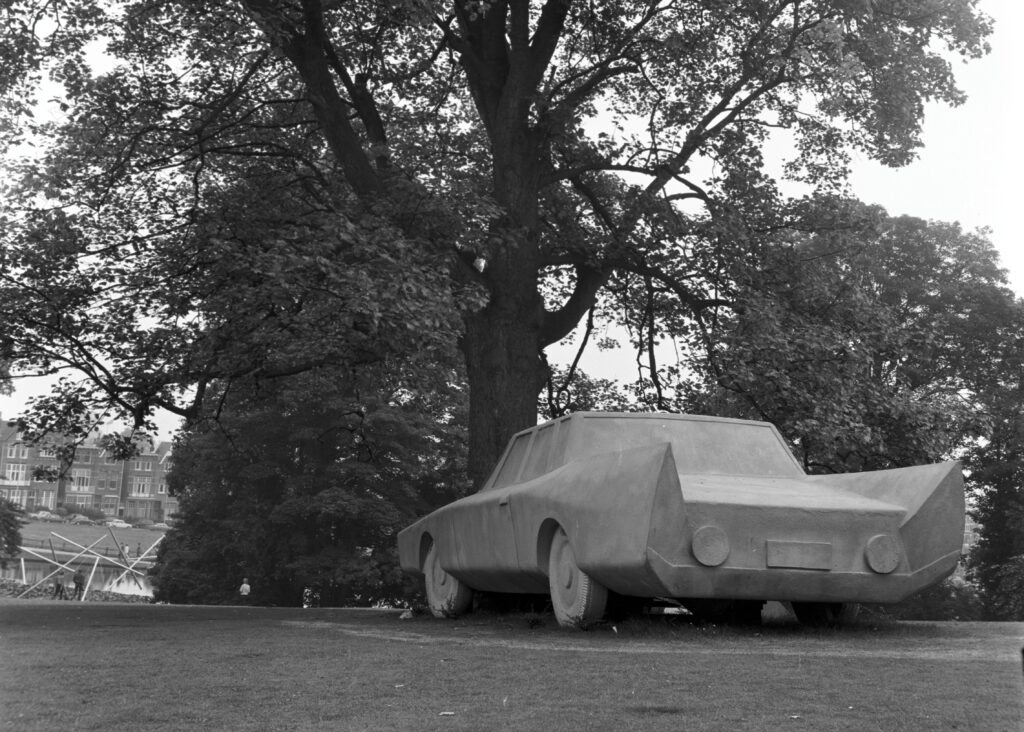
L’automobile légèrement endommagé
Sonsbeek buiten de perken, June- August 1971
Arnhem
Photo: Gemeentearchief Arnhem (14919)
Just in front of the White Villa (today the Stadsvilla) in Arnhem’s city park stood a gleaming hollow sphere of stainless steel, designed to collect rainwater by the renowned Constructivist sculptor André Volten. Not far away was Wim T. Schippers’s overgrown L’Automobile légèrement endommagée (The Car with Slight Damage), cast in yellow-painted concrete.
Decades later, my students still appreciated the joke.
‘This’, they would say, ‘is the Netherlands.’